Epoxy silicone oils are epoxy-functionalized polysiloxane fluids in which reactive epoxy (oxirane) groups are chemically incorporated into a silicone (–Si–O–Si–) backbone. This structure combines the intrinsic properties of silicone—low surface tension, thermal stability, flexibility, and hydrophobicity—with the chemical reactivity of epoxy groups.
Unlike conventional inert silicone oils, epoxy silicone oils can undergo ring-opening reactions with amines, hydroxyls, carboxyls, and other nucleophiles, enabling crosslinking, adhesion promotion, and covalent bonding within resin systems. They are widely used as reactive modifiers in coatings, adhesives, sealants, electronic encapsulants, and advanced composite formulations.
SiliconChemicals Epoxy Silicone Oil is a reactive epoxy-functional polysiloxane fluid designed for advanced formulation systems requiring both silicone surface performance and chemical reactivity. Built on a –Si–O–Si– backbone with pendant epoxy (oxirane) groups, it combines low surface tension, thermal stability, and flexibility with crosslinking capability toward amines, hydroxyls, and carboxyl groups. It functions as a reactive modifier, adhesion promoter, and compatibility enhancer in coatings, adhesives, sealants, electronics encapsulation, and high-performance composite systems.
| Model Code | Structure | Epoxy Type | Functionality | Viscosity (cSt) | Epoxy Content (%) | EEW (g/eq) | Key Application |
|---|---|---|---|---|---|---|---|
| EPO-M-100 | Linear | Glycidyl | Mono | 100 | 0.8 | 1800 | Adhesion modifier |
| EPO-M-500 | Linear | Glycidyl | Mono | 500 | 1.0 | 1500 | Resin compatibility |
| EPO-M-1000 | Linear | Glycidyl | Mono | 1000 | 1.2 | 1300 | Surface treatment |
| EPO-D-500 | Pendant | Glycidyl | Di | 500 | 2.5 | 900 | Coatings crosslink |
| EPO-D-1000 | Pendant | Glycidyl | Di | 1000 | 3.0 | 750 | Hybrid resins |
| EPO-D-3000 | Pendant | Glycidyl | Di | 3000 | 3.2 | 700 | Structural coatings |
| EPO-D-5000 | Pendant | Glycidyl | Di | 5000 | 3.5 | 650 | Sealants |
| EPO-MU-1000 | Branched | Glycidyl | Multi | 1000 | 4.5 | 500 | High-reactivity systems |
| EPO-MU-3000 | Branched | Glycidyl | Multi | 3000 | 5.0 | 450 | Silicone-epoxy hybrids |
| EPO-MU-5000 | Branched | Glycidyl | Multi | 5000 | 5.5 | 400 | Composite systems |
| EPO-T-300 | Linear | Terminal | Di | 300 | Terminal | 1200 | Reactive intermediates |
| EPO-T-1000 | Linear | Terminal | Di | 1000 | Terminal | 900 | Elastomers |
| EPO-T-3000 | Linear | Terminal | Di | 3000 | Terminal | 800 | Sealant systems |
| EPO-CA-500 | Linear | Cycloaliphatic | Di | 500 | 2.0 | 950 | UV coatings |
| EPO-CA-1500 | Pendant | Cycloaliphatic | Di | 1500 | 2.8 | 850 | Electronics |
| EPO-CA-3000 | Branched | Cycloaliphatic | Multi | 3000 | 3.5 | 600 | High-performance coatings |
| EPO-PH-1000 | Linear | Phenyl-Epoxy | Di | 1000 | 2.2 | 1000 | High-temp coatings |
| EPO-PH-3000 | Linear | Phenyl-Epoxy | Di | 3000 | 2.8 | 850 | Electrical insulation |
| EPO-PH-5000 | Branched | Phenyl-Epoxy | Multi | 5000 | 3.5 | 650 | Aerospace-grade systems |
| EPO-AM-1000 | Linear | Epoxy + Amino | Dual | 1000 | 3.0 | 800 | Adhesion enhancement |
| EPO-OH-1500 | Linear | Epoxy + Hydroxyl | Dual | 1500 | 3.2 | 750 | Crosslinkable blends |
| EPO-SH-2000 | Linear | Epoxy + Mercapto | Dual | 2000 | 3.5 | 700 | Fast curing systems |
| EPO-VI-3000 | Linear | Epoxy + Vinyl | Dual | 3000 | 3.8 | 650 | Silicone elastomers |
Product List

| Series | Epoxy Type | Key Characteristics | Target Applications |
|---|---|---|---|
| EPO-G Series | Glycidyl Epoxy | Balanced reactivity, versatile | Coatings, adhesives |
| EPO-CA Series | Cycloaliphatic Epoxy | UV stability, weather resistance | UV-curable systems, electronics |
| EPO-PH Series | Phenyl-Modified Epoxy | High thermal stability | Electrical & high-temp systems |
| EPO-DX Series | Dual-Functional Epoxy | Multi-reactive capability | Hybrid resin formulations |
| Structure Type | Functional Distribution | Engineering Role |
|---|---|---|
| Linear Pendant | Epoxy groups along chain | Surface modification |
| Terminal Epoxy | Epoxy at chain ends | Elastomers & sealants |
| Branched / Multi-Arm | Multi-site epoxy | High crosslink density |
| Phenyl-Backbone Modified | Aromatic-enhanced PDMS | Thermal resistance |
| Grade | Epoxy Groups per Chain | Crosslink Density | Positioning |
|---|---|---|---|
| Mono-Epoxy | 1 | Low | Adhesion modifier |
| Di-Epoxy | 2 | Medium | Reactive intermediate |
| Multi-Epoxy | ≥3 | High | Structural crosslinker |
| Viscosity Grade | Range (cSt @25°C) | Typical Use |
|---|---|---|
| Low | 50–500 | Surface & compatibility modifier |
| Medium | 500–5000 | Coatings & adhesives |
| High | 5000–20,000 | Sealants & structural systems |
| Reactivity Level | Epoxy Content (%) | EEW (g/eq) | Application Focus |
|---|---|---|---|
| Low | 0.5–2 | 1500–2000 | Compatibility enhancement |
| Medium | 2–4 | 700–1500 | Crosslink modification |
| High | 4–8 | 400–700 | Network formation |
| Industry Segment | Recommended Series |
|---|---|
| Industrial Coatings | EPO-G Di / Multi |
| Structural Adhesives | EPO-T / EPO-DX |
| Electronics & Encapsulation | EPO-CA |
| High-Temperature Insulation | EPO-PH |
| Textile Finishing | Low-viscosity EPO-G |
| Composite Materials | Branched Multi-Epoxy |
SiliconChemicals Epoxy Silicone Oil portfolio covers:
✔ Full epoxy chemistry spectrum
✔ Linear to branched architectures
✔ Mono to multi-functional grades
✔ 50–20,000 cSt viscosity coverage
✔ Low to high crosslink density systems
This structured range enables precise matching to curing chemistry, substrate type, and performance requirements.
SiliconChemicals Epoxy Silicone Oils are primarily used as reactive modifiers, adhesion promoters, and crosslinkable silicone intermediates in high-performance industrial formulations.
Epoxy silicone oils are selected when a formulation requires:
They function not as inert additives, but as reactive performance modifiers within advanced material systems.
SiliconChemicals Epoxy Silicone Oil is a reactive epoxy-functional polysiloxane fluid designed for advanced coating, adhesive, sealant, and electronic formulations. It integrates a flexible –Si–O–Si– siloxane backbone with chemically active epoxy (oxirane) groups, enabling crosslinking and covalent bonding within resin systems.
Compared with conventional inert silicone oils, this product functions as a reactive modifier and adhesion promoter, improving substrate bonding, compatibility between silicone and organic polymers, mechanical flexibility, and thermal stability. It is engineered for applications requiring both silicone surface performance and controlled chemical reactivity in hybrid material systems.
SiliconChemicals Epoxy Silicone Oil is based on a polysiloxane backbone (–Si–O–Si–) modified with reactive epoxy (oxirane) functional groups.
General structural concept: –[Si(CH₃)₂–O]ₙ–R–(Epoxy)
Where:
Depending on grade, epoxy groups may be:
The performance of epoxy silicone oil is driven by the combination of surface activity + chemical reactivity:
The low surface tension of the siloxane backbone causes the molecule to migrate toward interfaces (air–film, substrate–coating interface), improving wetting and leveling.
The epoxy group undergoes nucleophilic ring-opening reactions with:
This leads to covalent bonding within resin matrices or onto substrate surfaces.
Depending on functionality:
The combined mechanism results in:
In engineering terms, SiliconChemicals Epoxy Silicone Oil acts as a reactive silicone modifier that chemically integrates into curing systems while maintaining silicone surface properties.
The epoxy group undergoes nucleophilic ring-opening reactions with amines, hydroxyls, carboxyls, and thiols. This allows the silicone segment to chemically anchor into epoxy, polyurethane, acrylic, or hybrid resin matrices, transforming it from a physical additive into a structural component of the network.
Through chemical bonding and interfacial stress relaxation, epoxy silicone oil improves adhesion to metals, glass, ceramics, composites, and engineering plastics. It reduces interfacial failure and enhances long-term durability under thermal cycling or mechanical stress.
Unlike non-reactive silicone oils that may migrate or bloom, epoxy-functional grades participate in crosslinking. This reduces brittleness, increases impact resistance, and enhances crack propagation resistance while maintaining compatibility within the matrix.
Depending on mono-, di-, or multi-functional design, epoxy silicone oil can adjust network flexibility and crosslink density. This enables fine-tuning of hardness, elongation, and modulus in advanced coating and adhesive systems.
The siloxane backbone lowers surface tension, improving wetting, leveling, anti-cratering behavior, and release properties—without sacrificing adhesion due to the reactive epoxy anchoring.
In high-performance coatings, adhesives, sealants, electronics encapsulation, and composite systems, epoxy silicone oil serves as a reactive performance modifier rather than a passive additive. It enables structural integration, improved mechanical balance, and long-term stability in demanding industrial formulations.
First identify the curing mechanism of your formulation:
| Curing System | Recommended Epoxy Silicone Type |
|---|---|
| Amine-cured epoxy | Glycidyl di- or multi-functional |
| Acid / hydroxyl systems | Medium-reactivity epoxy grades |
| UV-cured systems | Cycloaliphatic epoxy |
| Silicone-elastomer blends | Terminal epoxy types |
The epoxy group must be chemically compatible with the hardener or reactive groups present.
| Functionality | When to Choose |
|---|---|
| Mono-epoxy | Adhesion improvement without major crosslink increase |
| Di-epoxy | Balanced flexibility + structural bonding |
| Multi-epoxy | High crosslink density & mechanical strength |
Higher functionality increases reactivity and network density but may raise viscosity and modulus.
Viscosity affects dispersion, leveling, and final mechanical properties.
| Viscosity Range (cSt) | Typical Use |
|---|---|
| 50–500 | Surface modifier, compatibility agent |
| 500–5000 | Coatings, adhesives |
| 5000–20,000 | Sealants, structural systems |
Low viscosity improves flow and wetting; higher viscosity improves mechanical reinforcement.
Lower EEW = higher reactivity.
Choose based on dominant performance goal:
| Performance Goal | Recommended Structure |
|---|---|
| Improved adhesion | Di-epoxy glycidyl |
| UV resistance | Cycloaliphatic |
| High temperature stability | Phenyl-modified |
| Toughening brittle epoxy | Medium-viscosity di-epoxy |
| Hybrid silicone-epoxy networks | Multi-functional branched |
To select the right epoxy silicone oil:
Proper selection transforms epoxy silicone oil from a simple additive into a precisely engineered reactive modifier within advanced material systems.
Packaging: 500 g / 1 kg / 5 kg / 25 kg / 200 kg drums / 1000L IBC container (Customized packaging is available).
Selecting the correct epoxy silicone oil directly impacts adhesion strength, crosslink density, mechanical flexibility, and long-term durability. Whether you are developing high-performance coatings, structural adhesives, electronic encapsulants, or hybrid silicone–epoxy systems, precise product matching is critical.
SiliconChemicals provides a full range of epoxy-functional silicone fluids covering multiple functionality levels, viscosity grades, and reactivity profiles to meet demanding industrial requirements.
If you are evaluating a new formulation or upgrading an existing system, contact our technical team with:
We will recommend the most suitable epoxy silicone oil grade for your application and provide detailed technical data support.
Disclaimer
“The information provided herein is based on general industry experience and is intended for reference purposes only. Actual performance and optimal usage conditions may vary depending on formulation, processing methods, substrate characteristics, and end-use requirements. Users are responsible for conducting their own tests and evaluations to determine suitability for their specific applications. No warranty, express or implied, is made regarding the completeness, accuracy, or applicability of this information.”
Selecting the right silane coupling agent is only the first step. Achieving optimal performance often requires application-specific evaluation and formulation optimization. Our technical team provides comprehensive support to ensure successful implementation across diverse material systems.


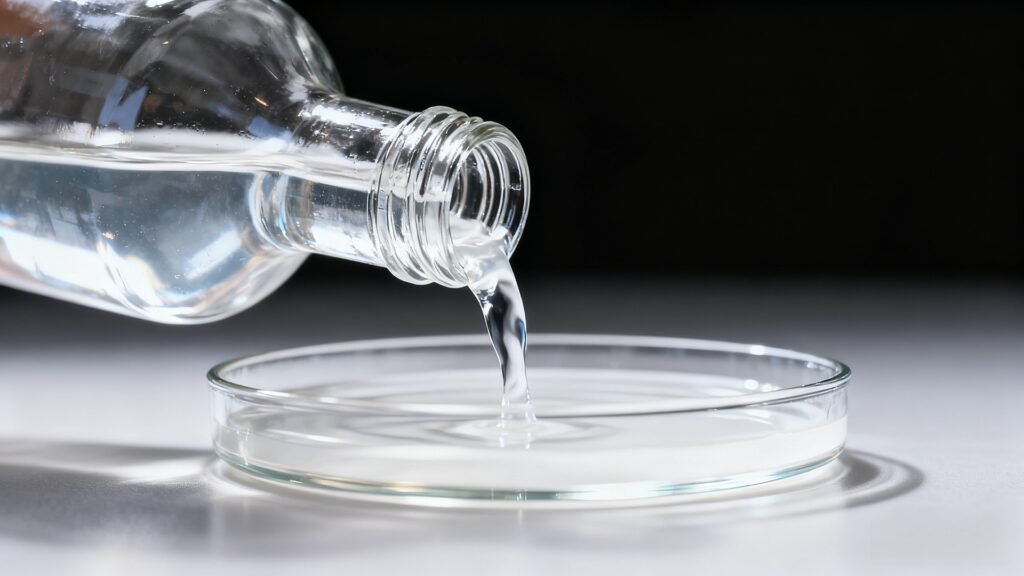


From Standard Supply to Customized Requirements
Built on technical expertise, manufacturing capability, and reliable supply

Supports batch quality verification & application-oriented testing, ensuring consistent performance & reliable product quality.

Stable, scalable manufacturing with standardized processes, supporting both regular supply and bulk industrial demand.
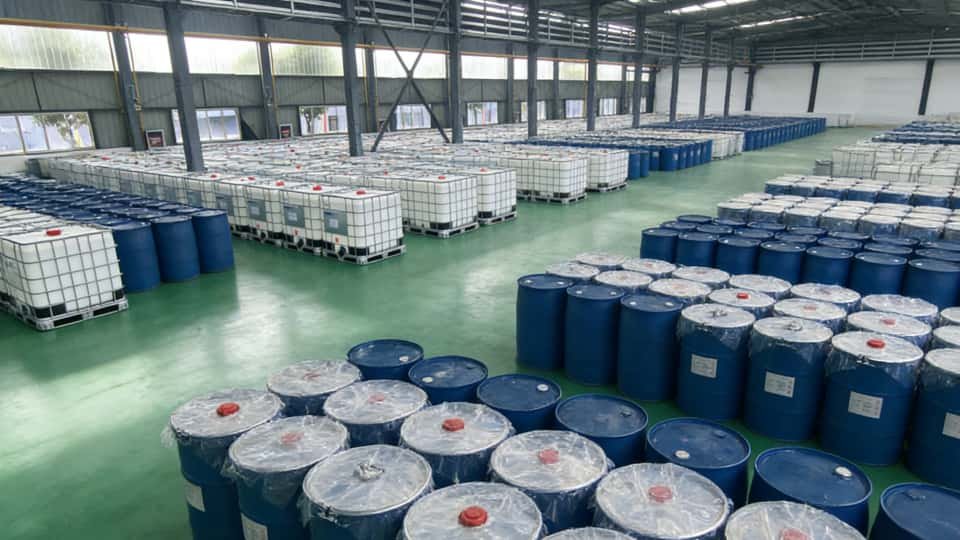
Products are stored under controlled conditions with standardized packaging, enabling efficient order fulfillment and reliable global delivery.

Clear communication and application-focused support, helping customers select suitable products and streamline procurement.
Navigate the complexities of the global Silicone Oil market. This definitive report provides actionable insights, vetted supplier landscapes, and strategic sourcing methodologies to optimize your supply chain in the year ahead.