Amino Silicone Oils are functional silicone fluids in which amine groups (–NH₂, –NH–, or quaternary ammonium groups) are chemically grafted onto a polydimethylsiloxane (PDMS) backbone. This modification introduces polarity and reactivity to otherwise inert silicone oil, fundamentally changing how it interacts with fibers, surfaces, and polymers. Amino silicone oils are reactive, cationic silicone fluids that combine the smoothness of silicone with the surface affinity of amines, making them indispensable for softness, conditioning, and performance enhancement across textile, personal care, and industrial applications.
SiliconChemicals® Amino Silicone Oils are high-performance functional silicone fluids engineered by grafting amine groups (–NH₂ / –NH– or quaternary ammonium) onto a PDMS backbone. This controlled modification delivers exceptional surface affinity, softness, and durability, making them ideal for demanding textile, personal care, and industrial formulations.
| Product Code | Functional Class | Amine Type | Chemical Structure | Termination / Side Group | Viscosity @25°C (cSt) | Amino Content (%) | Charge Type | Yellowing Level | Delivery Form | Key Performance Characteristics | Typical Applications |
|---|---|---|---|---|---|---|---|---|---|---|---|
| AS-300 | Amino Silicone Oil | Primary | Linear PDMS | Side-chain –NH₂ | 200–400 | 0.3–0.5 | Weak cationic | Medium | Neat oil | Ultra-soft, silky hand feel | Light textile finishing |
| AS-800 | Amino Silicone Oil | Primary | Linear PDMS | Side-chain –NH₂ | 600–1000 | 0.4–0.7 | Weak cationic | Medium | Neat oil | Balanced softness & slip | Fabric softener |
| AS-1500 | Amino Silicone Oil | Secondary | Linear PDMS | Side-chain –NH– | 1200–1800 | 0.6–1.0 | Cationic | Medium | Neat oil | Improved durability | Yarn lubrication |
| AS-3000 | Amino Silicone Oil | Secondary | Linear PDMS | Side-chain –NH– | 2500–3500 | 0.8–1.2 | Cationic | Medium–High | Neat oil | Strong adsorption | Knitted fabrics |
| AS-6000 | Amino Silicone Oil | Secondary | Linear PDMS | Side-chain –NH– | 5000–7000 | 1.0–1.5 | Cationic | High | Neat oil | Long-lasting softness | Heavy textiles |
| AS-10000 | Amino Silicone Oil | Mixed | Linear PDMS | Side-chain –NH₂/–NH– | 8000–12000 | 1.2–1.8 | Cationic | High | Neat oil | Maximum softness | Upholstery fabrics |
| QAS-800 | Quaternary Amino Silicone | Quaternary | Linear PDMS | –N⁺(CH₃)₃Cl⁻ | 600–900 | — | Permanent cationic | Low | Neat oil | Strong antistatic | Nonwovens |
| QAS-1500 | Quaternary Amino Silicone | Quaternary | Linear PDMS | –N⁺(CH₃)₃Cl⁻ | 1200–1800 | — | Permanent cationic | Low | Neat oil | High substantivity | Hair care |
| QAS-3000 | Quaternary Amino Silicone | Quaternary | Branched PDMS | –N⁺(CH₃)₃Cl⁻ | 2500–3500 | — | Permanent cationic | Low | Neat oil | Extreme adhesion | Industrial textiles |
| MYAS-800 | Micro-Amino Silicone Oil | Micro-amino | Linear PDMS | Low-density –NH– | 600–900 | <0.2 | Mild cationic | Very low | Neat oil | Color-safe softness | White fabrics |
| MYAS-2000 | Micro-Amino Silicone Oil | Micro-amino | Linear PDMS | Low-density –NH– | 1500–2500 | <0.3 | Mild cationic | Very low | Neat oil | Heat-resistant | Light-colored textiles |
| CAS-1500 | Comb-Type Amino Silicone | Secondary | Comb-type PDMS | Pendant –NH– | 1200–1800 | 0.6–1.0 | Cationic | Medium | Neat oil | Elastic hand feel | Knit finishing |
| BAS-4000 | Branched Amino Silicone | Secondary | Branched PDMS | Side-chain –NH– | 3500–4500 | 0.8–1.2 | Cationic | Medium | Neat oil | Resilient softness | Upholstery |
| ASE-40 | Emulsifiable Amino Silicone | Primary | Linear PDMS | Self-emulsifying | — | — | Cationic | Medium | 40% emulsion | Easy dilution | Textile finishing |
| ASE-60 | Emulsifiable Amino Silicone | Secondary | Linear PDMS | Self-emulsifying | — | — | Cationic | Medium | 60% emulsion | High efficiency | Bulk processing |
| ASE-Nano | Micro-emulsion Amino Silicone | Micro-amino | Linear PDMS | Nano-emulsified | — | — | Mild cationic | Very low | 20–30% emulsion | Transparent systems | Premium textiles |
| DAS-OH | Dual-Functional Amino Silicone | Amino + OH | Linear PDMS | –NH– / –OH | 2000–4000 | — | Cationic | Medium | Neat oil | Improved anchoring | Resin-modified systems |
| DAS-EP | Dual-Functional Amino Silicone | Amino + Epoxy | Linear PDMS | –NH– / Epoxy | 2500–5000 | — | Cationic | Medium | Neat oil | Crosslink compatibility | Coatings |
| DAS-PE | Dual-Functional Amino Silicone | Amino + Polyether | Comb-type PDMS | –NH– / PEG | 1500–3000 | — | Amphoteric | Low | Neat oil | Hydrophilic softness | Towel fabrics |
| DAS-Custom | Custom Amino Silicone | Custom | Custom PDMS | Multi-functional | Custom | Custom | Custom | Custom | Neat / Emulsion | Tailored performance | Special applications |
Product List

Amino Silicone Oils represent one of the most versatile and widely used functional silicone fluid families, distinguished by the introduction of amine-containing functional groups onto a PDMS backbone.
From an industrial and formulation perspective, their product range can be systematically classified by functionality, structure, and delivery form, enabling precise selection for performance-critical applications.
This is the core functional classification used in industrial selection, as amine type directly determines substantivity, softness, reactivity, and color stability.
Structural design strongly influences hand feel, elasticity, and durability.
Color stability is a critical industrial parameter, especially under heat and aging.
Formulation convenience and process compatibility define this layer of classification.
For specialized performance requirements, amino functionality can be combined with other reactive or hydrophilic groups:
Amino Silicone Oils product ranges are best understood through functional classification, supported by structural design and formulation form.
This multi-layer classification framework ensures:
SiliconChemicals Amino Silicone Oil is a family of high-performance functional silicone fluids engineered by introducing amine functionalities (–NH₂ / –NH– or quaternary ammonium groups) onto a PDMS backbone. This controlled modification imparts strong surface affinity, durable softness, and antistatic performance, making the products highly effective across textile, personal care, and industrial finishing applications.
SiliconChemicals® Amino Silicone Oils combine the inherent smoothness of silicone with the active affinity of amines—delivering durable softness, superior conditioning, and dependable performance across industries.
Amino Silicone Oils are based on a polydimethylsiloxane (PDMS) backbone, in which amine-containing organic groups are chemically introduced through side-chain grafting or, less commonly, terminal modification.
General structural features:
At the molecular level, amino silicone oils can be represented as organofunctional siloxanes, where the silicone backbone governs physical behavior while the amino groups dictate interfacial chemistry.
The performance of amino silicone oils arises from the synergistic interaction between the siloxane backbone and amino functionality.
| Structural Element | Functional Contribution |
|---|---|
| PDMS backbone | Softness, flexibility, thermal stability, slip |
| Amino groups | Adsorption, substantivity, antistatic performance |
| Amine type & density | Balance between softness, durability, and yellowing |
| Molecular architecture | Control of elasticity, resilience, and hand feel |
Amino silicone oils function by anchoring to substrates through amino-driven surface interactions, while simultaneously presenting a mobile silicone layer that delivers durable softness, lubrication, and antistatic performance.
This clear separation of roles—chemical anchoring by amino groups and physical performance by the siloxane backbone—is the fundamental reason amino silicone oils outperform conventional silicone fluids in demanding finishing applications.
Thanks to their unique combination of cationic surface affinity and silicone lubricity, amino silicone oils are used wherever durable softness, smoothness, and antistatic performance are required. Below is a complete, industry-grade overview of their typical applications, organized by sector and performance logic.
Amino silicone oils are core finishing agents in textile processing due to their strong affinity for fibers and superior hand-feel enhancement.
Typical uses:
Key benefits in textiles:
Common substrates:
In personal care formulations, amino silicone oils are valued for their selective adsorption to keratin and long-lasting conditioning effect.
Typical uses:
Key benefits:
Why amino silicones work here:
Protonated amino groups bind to negatively charged hair surfaces, while the PDMS backbone provides slip and softness.
Amino silicone oils are widely used in leather finishing and synthetic surface treatment to enhance touch and durability.
Typical uses:
Key benefits:
In fibrous substrates, amino silicone oils act as softness enhancers and antistatic agents.
Typical uses:
Key benefits:
In coatings systems, amino silicone oils function as performance additives rather than bulk modifiers.
Typical uses:
Key benefits:
Certain amino silicone oils are used in polymer processing and compounding, especially where surface modification is required.
Typical uses:
Key benefits:
| Application Sector | Primary Function |
|---|---|
| Textiles | Softness, durability, hand feel |
| Hair care | Conditioning, smoothness, antistatic |
| Leather & synthetics | Flexibility, premium touch |
| Paper & nonwovens | Softness, antistatic |
| Coatings & inks | Slip, leveling, surface modification |
| Plastics & polymers | Lubrication, antistatic control |
Amino silicone oils are chosen wherever long-lasting softness, strong surface attachment, and controlled lubricity are required—especially on fibrous or polar substrates.
Amino Silicone Oils are used because they deliver performance effects that conventional silicone oils cannot achieve, especially where durable softness, strong surface affinity, and functional interaction with substrates are required. Their value comes from the combination of reactive amino groups and a flexible silicone backbone, creating a balance of chemistry and physical performance.
Unlike non-functional silicone oils that rely mainly on physical coating, amino silicone oils chemically anchor to substrates through amino groups.
This results in:
This is why amino silicone oils are preferred in high-end textile finishing and hair conditioning.
Amino groups become cationic (positively charged) under normal processing conditions, enabling strong interaction with negatively charged surfaces such as:
This affinity ensures:
Static electricity is a common issue in synthetic fibers and polymer surfaces. Amino silicone oils help by:
This makes them ideal for synthetic textiles, nonwovens, plastics, and hair care products.
Once anchored, the PDMS backbone aligns outward, forming a low-friction silicone layer that provides:
This dual action—chemical anchoring + physical lubrication—is a key advantage over other softening agents.
Using amino silicone oils can reduce overall formulation complexity by:
This translates into cost efficiency and stable production performance.
Amino silicone oils are highly versatile because their properties can be adjusted by:
This allows precise matching to:
| Aspect | Conventional Silicone Oil | Amino Silicone Oil |
|---|---|---|
| Surface affinity | Low | High |
| Softness durability | Limited | Long-lasting |
| Antistatic effect | Minimal | Strong |
| Wash resistance | Poor–moderate | Excellent |
| Functional interaction | Inert | Active |
Amino silicone oils are used because they combine chemical anchoring with silicone softness—delivering durable, antistatic, and high-value surface performance that conventional silicone oils cannot provide.
Choosing the correct amino silicone oil is about matching chemistry to performance targets and process conditions. Use the steps below to make a fast, reliable decision—whether for textiles, personal care, or industrial finishing.
Start with what must be achieved on the substrate:
Rule of thumb: Performance target first, chemistry second.
The amine functionality determines adsorption strength, durability, and color stability.
| Amine Type | When to Choose | Typical Trade-offs |
|---|---|---|
| Primary / Secondary Amine | General softness, textile finishing | Possible yellowing at high levels |
| Quaternary Amine | Strong substantivity, antistatic needs | Higher cost, stronger cationic nature |
| Micro-Amino | White or pastel fabrics, heat exposure | Slightly reduced softness |
| Dual-Functional (Amino + X) | Special compatibility or anchoring | Custom formulation required |
Viscosity correlates strongly with hand feel and durability.
Textiles tip: Medium MW is usually the safest starting point.
Structure affects elasticity, rebound, and tactile perception.
Yellowing is often overlooked but critical for quality control.
Choose:
Pick the form that best fits your process:
Production efficiency matters: emulsions save time; neat oils offer control.
Before final selection, confirm:
| Application | Recommended Amino Silicone Oil |
|---|---|
| Cotton / blended fabrics | Medium-MW primary or secondary amino |
| Synthetic fibers | Quaternary or higher amine content |
| White / light fabrics | Micro-amino, low-yellowing grade |
| Hair care | Quaternary amino or low-amine conditioning grade |
| Premium textiles | Comb-type or branched amino silicone |
| Antistatic finishing | Quaternary amino silicone |
The right amino silicone oil is chosen by balancing amine type, molecular weight, structure, and formulation form against the exact performance and processing needs.
Packaging: 500 g / 1 kg / 5 kg / 25 kg / 200 kg drums / 1000L IBC container (Customized packaging is available).
SiliconChemicals provides a complete portfolio of Amino Silicone Oils—from standard grades to low-yellowing and quaternary systems—supported by application-focused technical expertise.
👉 Talk to our technical team today to:
Contact us now to optimize softness, durability, and antistatic performance—with confidence and consistency.
Disclaimer
“The information provided herein is based on general industry experience and is intended for reference purposes only. Actual performance and optimal usage conditions may vary depending on formulation, processing methods, substrate characteristics, and end-use requirements. Users are responsible for conducting their own tests and evaluations to determine suitability for their specific applications. No warranty, express or implied, is made regarding the completeness, accuracy, or applicability of this information.”
Selecting the right silane coupling agent is only the first step. Achieving optimal performance often requires application-specific evaluation and formulation optimization. Our technical team provides comprehensive support to ensure successful implementation across diverse material systems.



From Standard Supply to Customized Requirements
Built on technical expertise, manufacturing capability, and reliable supply

Supports batch quality verification & application-oriented testing, ensuring consistent performance & reliable product quality.

Stable, scalable manufacturing with standardized processes, supporting both regular supply and bulk industrial demand.
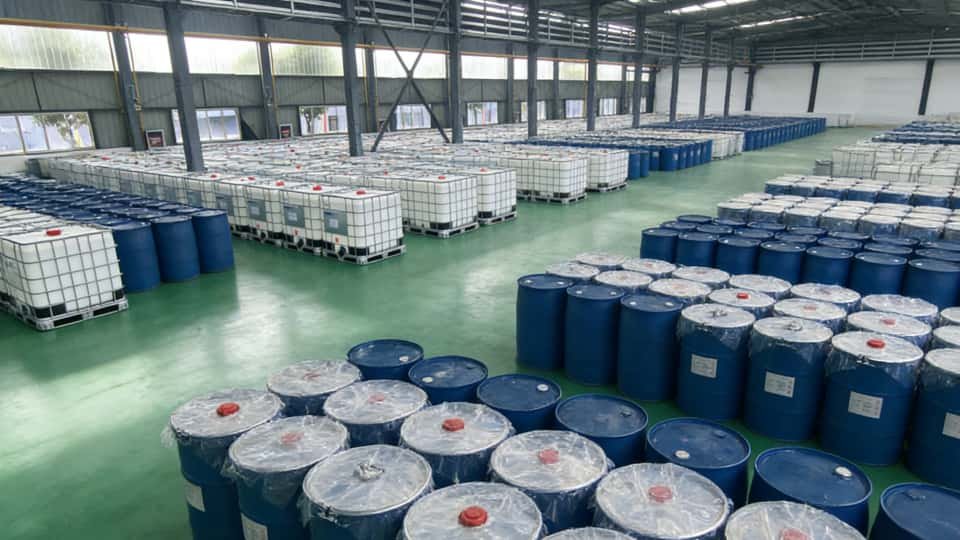
Products are stored under controlled conditions with standardized packaging, enabling efficient order fulfillment and reliable global delivery.

Clear communication and application-focused support, helping customers select suitable products and streamline procurement.
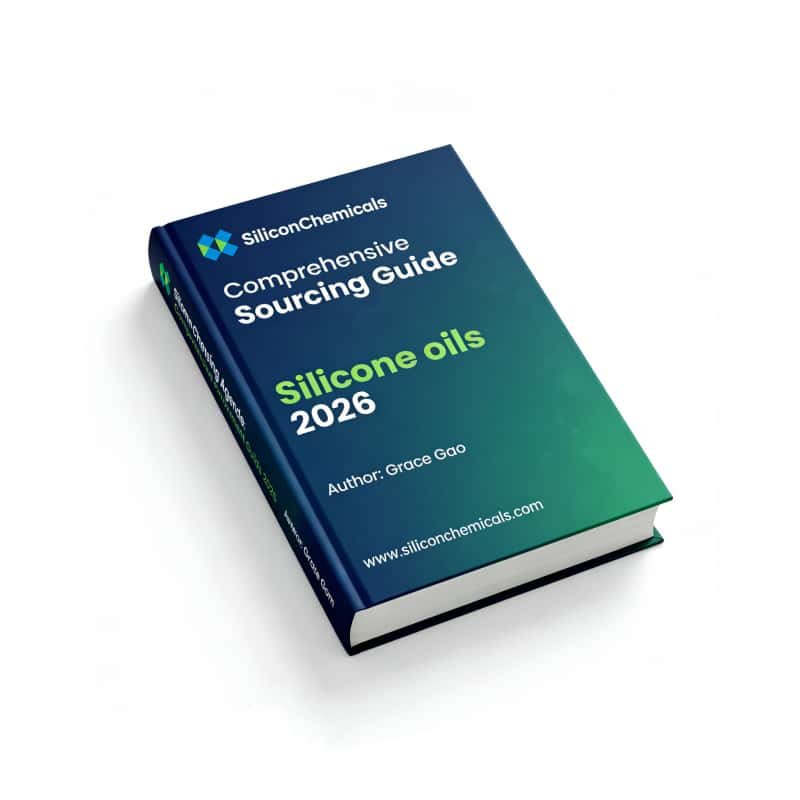
Navigate the complexities of the global Silicone Oil market. This definitive report provides actionable insights, vetted supplier landscapes, and strategic sourcing methodologies to optimize your supply chain in the year ahead.
