Product Overview

Fluorosilicone Oils

What Are Fluorosilicone Oils ?

Fluorosilicone oils are a specialized class of silicone fluids in which part of the methyl groups on the silicone backbone are replaced by fluoroalkyl groups (commonly trifluoropropyl). This structural modification combines the thermal stability and flexibility of silicone oils with the chemical resistance of fluorinated materials.

SiliconChemicals® Fluorosilicone Oils are high-performance silicone fluids engineered for environments where fuels, oils, and aggressive chemicals are present. By incorporating fluoroalkyl side groups into the siloxane backbone, these fluids deliver a unique balance of silicone-level thermal stability and fluorochemical resistance—far beyond conventional PDMS silicone oils.

Product NameModel No.StructureFluorination LevelViscosity @25 °C (cSt)Functional CodeOperating Temp (°C)Key StrengthsTypical Applications
Fluorosilicone Oil 10 cStFSO-FVMQ-10FVMQStandard10–60 ~ +200Ultra-low viscosity, fast responseSensors, micro-mechanisms
Fluorosilicone Oil 20 cStFSO-FVMQ-20FVMQStandard20–60 ~ +200Precision lubricationInstruments, electronics
Fluorosilicone Oil 50 cStFSO-FVMQ-50FVMQStandard50–60 ~ +200Stable dampingAerospace instruments
Fluorosilicone Oil 100 cStFSO-FVMQ-100FVMQStandard100–60 ~ +200Balanced lubricationAutomotive components
Fluorosilicone Oil 350 cStFSO-FVMQ-350FVMQStandard350–60 ~ +200Seal stabilityValves, O-rings
Fluorosilicone Oil 500 cStFSO-FVMQ-500FVMQStandard500–60 ~ +200Controlled dampingControl systems
Fluorosilicone Oil 1000 cStFSO-FVMQ-1000FVMQStandard1,000–60 ~ +200Fuel-contact durabilityFuel seals
Fluorosilicone Oil 3000 cStFSO-FVMQ-3000FVMQStandard3,000–60 ~ +200High film strengthAerospace sealing
Fluorosilicone Oil 5000 cStFSO-FVMQ-5000FVMQStandard5,000–60 ~ +200Heavy-duty lubricationStatic seals
Fluorosilicone Oil 10000 cStFSO-FVMQ-10000FVMQStandard10,000–60 ~ +200Extreme dampingSpecialty devices
Fluorosilicone Oil 30000 cStFSO-FVMQ-30000FVMQStandard30,000–60 ~ +200Ultra-high viscosityGrease compounding
Partially Fluorinated Silicone Oil 50 cStFSO-PF-50PFPartial50–50 ~ +180Cost-effective fuel resistanceLight fuel exposure
Partially Fluorinated Silicone Oil 100 cStFSO-PF-100PFPartial100–50 ~ +180Balanced performanceAutomotive
Partially Fluorinated Silicone Oil 350 cStFSO-PF-350PFPartial350–50 ~ +180Improved oil resistanceIndustrial seals
Partially Fluorinated Silicone Oil 1000 cStFSO-PF-1000PFPartial1,000–50 ~ +180Mid-range sealingGeneral machinery
High-Fluorine Fluorosilicone Oil 100 cStFSO-HF-100HFHigh100–40 ~ +200Maximum chemical resistanceChemical processing
High-Fluorine Fluorosilicone Oil 350 cStFSO-HF-350HFHigh350–40 ~ +200Low swelling in fuelsAviation systems
High-Fluorine Fluorosilicone Oil 1000 cStFSO-HF-1000HFHigh1,000–40 ~ +200Extreme durabilityAerospace equipment
High-Fluorine Fluorosilicone Oil 5000 cStFSO-HF-5000HFHigh5,000–40 ~ +200Long-life sealingCritical equipment
Low-Temperature Fluorosilicone Oil 100 cStFSO-FVMQ-100-LTFVMQStandard100LT–60 ~ +180Cold-start flexibilityArctic / cold climates
High-Temperature Fluorosilicone Oil 1000 cStFSO-FVMQ-1000-HTFVMQStandard1,000HT–40 ~ +220Thermal enduranceHigh-temp seals
Low-Volatility Fluorosilicone Oil 1000 cStFSO-FVMQ-1000-LVFVMQStandard1,000LV–60 ~ +200Minimal evaporationVacuum, aerospace
Fuel-Resistant Fluorosilicone Oil 500 cStFSO-FVMQ-500-FRFVMQStandard500FR–60 ~ +200Optimized for fuelsJet fuel systems
Electrically Insulating Fluorosilicone Oil 100 cStFSO-FVMQ-100-EIFVMQStandard100EI–60 ~ +200Dielectric stabilitySensors, electronics
Fluorosilicone Grease Base Oil 3000 cStFSO-FVMQ-GR-3000FVMQStandard3,000GR–60 ~ +200Grease base oilLight fluorosilicone grease
Fluorosilicone Grease Base Oil 10000 cStFSO-FVMQ-GR-10000FVMQStandard10,000GR–60 ~ +200General grease baseIndustrial grease
Fluorosilicone Grease Base Oil 30000 cStFSO-FVMQ-GR-30000FVMQStandard30,000GR–60 ~ +200High-load grease baseHeavy-duty grease

Remark: FVMQ refers to standard trifluoropropyl fluorosilicone oils (mainstream grade); PF denotes partially fluorinated silicone oils offering a balanced cost–performance profile; HF indicates high-fluorine fluorosilicone oils designed for severe chemical and fuel environments. Functional codes identify performance-enhanced grades, including LT (low temperature), HT (high temperature), LV (low volatility), FR (fuel-optimized), EI (electrical insulation), and GR (grease base oil).

Get a Quote / Sample

Have a question, need a quote, or want to discuss your project?   We’re here to help.

Product Range & Functional Classification

Fluorosilicone oils are available across a broad, engineering-oriented product range designed to meet different chemical exposure levels, temperature windows, and functional requirements. The portfolio can be systematically classified by base structure, viscosity range, and functional performance, enabling precise material selection rather than one-size-fits-all substitution.

1. Product Range by Base Structure
  • FVMQ Fluorosilicone Oils
    Standard trifluoropropyl-modified fluorosilicones and the mainstream choice for most applications requiring fuel and oil resistance.
  • PF (Partially Fluorinated) Silicone Oils
    Cost-optimized grades offering moderate fuel and oil resistance where full fluorosilicone performance is not required.
  • HF (High-Fluorine) Fluorosilicone Oils
    High fluorine content grades engineered for severe chemical, solvent, and fuel environments with minimal swelling and long service life.
2. Product Range by Viscosity
  • Ultra-low viscosity (10–50 cSt) – precision lubrication, sensors, micro-mechanisms
  • Low to medium viscosity (100–500 cSt) – general lubrication, damping, automotive and aerospace components
  • Medium to high viscosity (1,000–5,000 cSt) – sealing oils, fuel-contact components
  • Very high viscosity (10,000–30,000 cSt) – heavy damping, grease compounding, static seals
3. Functional Classification

To address specific operating demands, fluorosilicone oils are further classified by functional performance:

  • LT (Low Temperature) – enhanced flexibility and flow at extremely low temperatures
  • HT (High Temperature) – improved stability under continuous high-temperature operation
  • LV (Low Volatility) – reduced evaporation for vacuum and aerospace environments
  • FR (Fuel-Optimized) – maximized resistance to gasoline, diesel, and jet fuels
  • EI (Electrical Insulation) – stable dielectric properties for sensors and electronics
  • GR (Grease Base Oil) – high-viscosity base oils for fluorosilicone grease formulations

Siliconchemicals Fluorosilicone oils

SiliconChemicals® Fluorosilicone Oils are high-performance silicone fluids engineered for fuel-, oil-, and solvent-exposed environments where conventional PDMS silicone oils are insufficient. By incorporating fluoroalkyl side groups into the siloxane backbone, these fluids combine silicone-level thermal stability with enhanced chemical and fuel resistance, enabling reliable performance across demanding industrial duty windows.

Typical Applications
  • Aerospace & Aviation: Fuel systems, seal oils, damping fluids
  • Automotive: Fuel-contact lubrication, sensors, specialty greases
  • Chemical Processing: Valves, diaphragms, seals under aggressive media
  • Electronics: Dielectric and protective fluids in harsh environments
  • Industrial Systems: Extreme-condition lubrication and motion control
Why SiliconChemicals
  • Engineering-driven selection across structure, viscosity, and function
  • Consistent quality & documentation (TDS/SDS, batch control)
  • Customization capability for viscosity, volatility, and media resistance
  • Reliable global supply for industrial, automotive, and aerospace users
Need selection support?

SiliconChemicals® provides application-focused guidance to match fluorosilicone oils precisely to your temperature profile, media exposure, and performance targets.

Chemical Structure & Functional Mechanism

Fluorosilicone oils are chemically modified silicone fluids designed to extend the performance limits of conventional silicone oils in fuel-, oil-, and solvent-exposed environments. Their unique behavior is governed by both the siloxane backbone and the fluorinated side-chain architecture, which together define how the fluid interacts with temperature, chemicals, and surrounding materials.

1.1 Siloxane Backbone

At the core of fluorosilicone oils is the classic siloxane chain:

–Si–O–Si–O–Si–

This backbone provides:

  • Exceptional thermal stability
  • High bond flexibility
  • Low glass-transition temperature
  • Inherent oxidation resistance

These properties are common to all silicone oils and form the structural foundation of fluorosilicone fluids.

1.2 Fluoroalkyl Side-Group Substitution

What differentiates fluorosilicone oils from standard PDMS silicone oils is the partial replacement of methyl (–CH₃) groups with fluoroalkyl groups, most commonly:

–CH₂–CH₂–CF₃ (trifluoropropyl)

This substitution introduces:

  • C–F bonds with very high bond energy
  • Increased molecular polarity
  • Reduced affinity for hydrocarbons

Depending on fluorine content, fluorosilicone oils are typically categorized as:

  • FVMQ-type (standard trifluoropropyl substitution)
  • PF (partially fluorinated) structures
  • HF (high-fluorine) structures for severe media exposure
2.1 Fuel & Oil Resistance Mechanism

Hydrocarbon fuels and oils readily dissolve or swell conventional silicone oils because both are non-polar and chemically compatible.
Fluorosilicone oils disrupt this compatibility through fluorinated side chains, which:

  • Lower solubility in fuels and oils
  • Reduce swelling and extraction
  • Maintain viscosity and film integrity during long-term exposure

Result: Stable lubrication and sealing performance in gasoline, diesel, jet fuel, and lubricating oils.

2.2 Polarity-Controlled Media Interaction

Fluoroalkyl groups introduce controlled polarity into the silicone molecule:

  • Enough polarity to resist hydrocarbons
  • Still flexible enough to retain silicone-like flow and elasticity

This balance allows fluorosilicone oils to function where pure fluorinated fluids may be too rigid or costly, while standard silicones fail chemically.

2.3 Temperature Stability Mechanism

The Si–O backbone dominates temperature behavior:

  • Maintains flexibility at low temperatures (down to ~–60 °C for LT grades)
  • Resists thermal degradation at high temperatures (typically up to ~200 °C continuous)

Functional grades (LT / HT) fine-tune this balance through molecular-weight control and formulation optimization, without altering the fundamental backbone chemistry.

2.4 Volatility & Evaporation Control

Fluorinated side chains:

  • Increase molecular weight
  • Reduce vapor pressure
  • Suppress low-molecular volatile fractions

This explains why LV (low-volatility) fluorosilicone oils are preferred in:

  • Aerospace systems
  • Vacuum environments
  • Sensitive optical or electronic assemblies
2.5 Lubrication & Damping Mechanism

Fluorosilicone oils lubricate primarily through:

  • Stable fluid film formation
  • Low surface energy → reduced friction
  • Minimal chemical interaction with metals and elastomers

For damping applications, viscosity stability across temperature ensures predictable motion control, not sudden stiffening or thinning.

2.6 Elastomer Compatibility Mechanism

Fluorosilicone oils show excellent compatibility with:

  • FVMQ fluorosilicone rubbers
  • Many fluorinated elastomers

Because both materials share similar fluorinated chemistry, mutual swelling and extraction are minimized—critical for fuel-system seals and O-rings.

Structural FeatureFunctional Outcome
Si–O–Si backboneThermal stability, flexibility
Trifluoropropyl side groupsFuel & oil resistance
Higher fluorine contentImproved chemical resistance
Controlled molecular weightViscosity stability
Reduced volatile fractionsLow evaporation & outgassing
Fluorosilicone oils do not rely on additives for their core performance.

Their resistance to fuels, oils, and temperature extremes is intrinsic to the molecular structure, making them inherently more stable and predictable than modified PDMS systems.

This structure–function relationship is why fluorosilicone oils are trusted in aerospace, automotive fuel systems, chemical processing equipment, and high-reliability electronics—applications where failure is not an option.

Typical Applications

Fluorosilicone oils are selected in applications where fuel, oil, or aggressive chemical exposure must be combined with wide temperature capability, stable viscosity, and long-term reliability. Their use is driven by duty conditions, not by industry alone.

Aerospace & Aviation
  • Fuel-system lubrication and damping fluids
  • Seal oils for O-rings and gaskets exposed to jet fuel
  • Motion control and damping in instruments and actuators
  • Low-volatility fluids for high-altitude and vacuum-adjacent environments

Key drivers: fuel resistance, low volatility, thermal stability, long service life.

Automotive & Transportation
  • Fuel-contact lubrication (gasoline, diesel, biofuel blends)
  • Oxygen sensors and exhaust-adjacent components
  • Assembly lubrication for fuel-system seals
  • Specialty fluorosilicone greases (via grease base oils)

Key drivers: resistance to fuels and additives, cold-start performance, elastomer compatibility.

Chemical Processing & Industrial Equipment
  • Valve, diaphragm, and seal lubrication in chemically exposed systems
  • Damping fluids in control and metering devices
  • Lubrication where oils, solvents, or mixed hydrocarbons are present

Key drivers: chemical resistance, viscosity stability, reduced swelling and extraction.

Electronics & Electrical Systems
  • Protective and dielectric fluids for sensors and connectors
  • Moisture-resistant insulation fluids in harsh environments
  • Low-residue, low-volatility protection for sensitive components

Key drivers: dielectric stability, cleanliness, controlled volatility.

Industrial Lubrication & Motion Control
  • Precision damping fluids for shock absorbers and motion-control units
  • Lubrication in systems requiring predictable viscosity–temperature behavior
  • Sealing and lubrication in extreme environments where PDMS oils fail

Key drivers: stable damping response, wide temperature range, durability.

Sealing Systems & Elastomer Compatibility
  • Lubrication of FVMQ fluorosilicone rubber seals
  • Long-life seal oils minimizing swelling in fuel contact
  • Static and dynamic sealing in aerospace and chemical systems

Key drivers: compatibility with fluorosilicone elastomers, fuel resistance.

Grease Formulation (via Fluorosilicone Grease Base Oils)
  • Base oils for fluorosilicone greases used in fuel- and oil-exposed locations
  • High-viscosity lubrication where conventional greases degrade

Key drivers: high viscosity, chemical stability, grease compatibility.

Fluorosilicone oils are typically applied where standard silicone oils fail chemically and where pure fluorinated fluids are unnecessary or impractical. Their role is critical in systems requiring a balanced combination of chemical resistance, temperature performance, and functional reliability across aerospace, automotive, chemical, electronic, and industrial sectors.

Why Use Fluorosilicone oils ?

Fluorosilicone oils are used when standard silicone oils (PDMS) can no longer meet the chemical or environmental demands of an application, but where fully fluorinated fluids would be unnecessary, overly rigid, or cost-prohibitive. Their value lies in a unique balance of properties that no single alternative material can provide.

Conventional silicone oils swell, dissolve, or lose viscosity when exposed to gasoline, diesel, jet fuel, or lubricating oils.
Fluorosilicone oils incorporate fluorinated side groups that break chemical compatibility with hydrocarbons, resulting in:

  • Reduced swelling and extraction
  • Stable viscosity during long-term fuel contact
  • Reliable sealing and lubrication in fuel systems

This is the primary reason fluorosilicone oils are specified.

Thanks to the siloxane backbone, fluorosilicone oils retain:

  • Low-temperature flexibility (typically down to –60 °C for LT grades)
  • High-temperature stability (commonly up to ~200 °C continuous)

This makes them suitable for cold-start + high-heat duty cycles, especially in aerospace and automotive systems.

Fluorosilicone oils maintain consistent viscosity–temperature behavior, which is critical for:

  • Precision damping
  • Motion control
  • Seal lubrication

Predictability is often more important than absolute lubricity in high-reliability systems.

Compared with many standard silicone oils, fluorosilicone oils exhibit:

  • Lower evaporation rates
  • Reduced fogging and outgassing

This is essential for aerospace, vacuum-adjacent, optical, and electronic applications, where contamination cannot be tolerated.

Fluorosilicone oils are chemically compatible with FVMQ fluorosilicone rubbers, minimizing:

  • Seal swelling
  • Hardness drift
  • Loss of mechanical integrity

This compatibility is critical for fuel-system O-rings, gaskets, and dynamic seals.

The core advantages of fluorosilicone oils come from molecular structure, not additive packages.
As a result, they offer:

  • Long service life
  • Reduced performance drift over time
  • Greater reliability in harsh environments

While PFPE and other fully fluorinated fluids offer extreme chemical resistance, they may:

  • Lack low-temperature flexibility
  • Be unnecessarily expensive
  • Be incompatible with certain elastomers

Fluorosilicone oils provide a practical middle ground—sufficient chemical resistance with silicone-like flexibility and processability.

You use fluorosilicone oils when an application requires:

  • Continuous or repeated fuel/oil exposure
  • Wide temperature performance
  • Stable viscosity and low volatility
  • Seal compatibility and long-term reliability

They are not general-purpose fluids—but in fuel-contact, chemically exposed, or reliability-critical systems, they are often the optimal and sometimes the only viable solution.

How to Choose the Right fluorosilicone oils ?

Selecting the correct fluorosilicone oil is an engineering decision, not a catalog lookup. The right choice comes from matching the oil’s molecular structure, viscosity, and functional grade to the real duty window of your application.

Below is a professional, step-by-step selection logic used in aerospace, automotive, and chemical industries.

Start with what the oil will contact:

  • Fuels (gasoline, diesel, jet fuel, biofuel blends)
  • Lubricating oils / hydrocarbons
  • Solvents or mixed chemical media
  • Splash vs continuous immersion vs vapor exposure

Selection rule

  • Moderate fuel/oil exposure → FVMQ fluorosilicone oils
  • Intermittent or light exposure with cost sensitivity → PF (partially fluorinated)
  • Severe, long-term fuel or chemical exposure → HF (high-fluorine)

If this step is wrong, no viscosity choice will save the application.

Specify both ends of the temperature range:

  • Minimum temperature (cold start, altitude, storage)
  • Continuous operating temperature
  • Short-term peaks

Guidance

  • Cold environments / cold start issues → choose LT (low-temperature) grades
  • Continuous high heat → choose HT (high-temperature) grades
  • Wide swings (cold → hot) → prioritize viscosity stability, not just limits

Viscosity controls film thickness, damping behavior, leakage, and torque.

Application NeedTypical Viscosity
Sensors, micro-mechanisms10–50 cSt
General lubrication, light damping100–500 cSt
Seal oils, fuel-contact lubrication1,000–5,000 cSt
Heavy damping, grease base oils10,000–30,000+ cSt

Engineering tip:
For damping systems, always consider viscosity–temperature behavior, not just the nominal cSt at 25 °C.

Use functional codes only when the duty requires them:

  • LT – Low-temperature flexibility (–40 °C to –60 °C environments)
  • HT – Continuous high-temperature stability
  • LV – Low volatility (vacuum, aerospace, optics, electronics)
  • FR – Fuel-optimized for constant fuel immersion
  • EI – Electrical insulation / sensor protection
  • GR – Grease base oil for fluorosilicone grease formulation

Avoid over-specifying: unnecessary functional grades increase cost without benefit.

Fluorosilicone oils are typically compatible with:

  • FVMQ fluorosilicone rubbers
  • Many fluorinated elastomers

Still verify:

  • Seal swell limits
  • Hardness change
  • Long-term extraction effects

This is especially important for dynamic seals and O-rings.

Ask these questions:

  • Is evaporation or fogging unacceptable? → LV grades
  • Is the system sealed for long service intervals?
  • Are optics, sensors, or electronics nearby?

Low volatility and intrinsic chemical stability often matter more than lubrication alone.

Before final approval:

  • Test in actual media (real fuel, oil, additives)
  • Include temperature cycling
  • Check viscosity retention and seal behavior over time

Fluorosilicone oils perform best when validated against the true duty window, not just datasheet limits.

You choose fluorosilicone oils correctly by answering five questions:

  1. What chemicals will it touch?
  2. What temperatures will it really see?
  3. What viscosity does the function require?
  4. Is a functional grade (LT / HT / LV / FR / EI / GR) necessary?
  5. What service life and reliability are expected?

Fluorosilicone oils are not general-purpose fluids. They are chosen because failure is unacceptable—fuel systems, aerospace components, chemical equipment, and high-reliability electronics.

Packaging & Storage

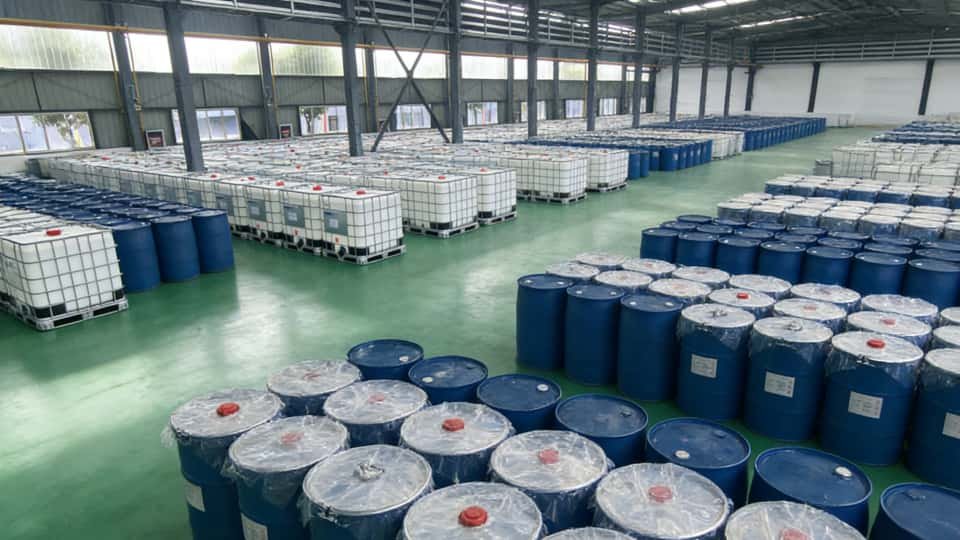
Packaging:  500 g / 1 kg / 5 kg / 25 kg / 200 kg drums / 1000L IBC container (Customized packaging is available).

Need help selecting the right fluorosilicone oils for your application?

At SiliconChemicals, our technical team supports customers from initial material selection to formulation optimization and scale-up.

  • Request product recommendations based on your application and process
  • Ask for TDS / SDS and compliance documentation
  • Discuss custom viscosity, functionality, or regulatory grades
  • Get support for industrial, electronic, food-contact, or medical applications

👉 Contact SiliconChemicals today to discuss your requirements and identify the most suitable fluorosilicone oils  solution for reliable, long-term performance.

Disclaimer

“The information provided herein is based on general industry experience and is intended for reference purposes only. Actual performance and optimal usage conditions may vary depending on formulation, processing methods, substrate characteristics, and end-use requirements. Users are responsible for conducting their own tests and evaluations to determine suitability for their specific applications. No warranty, express or implied, is made regarding the completeness, accuracy, or applicability of this information.”


Technical Support & Customization

Selecting the right silane coupling agent is only the first step. Achieving optimal performance often requires application-specific evaluation and formulation optimization. Our technical team provides comprehensive support to ensure successful implementation across diverse material systems.

Organosilicon Laboratory

Application & Technical Support

silane coupling agent

Sample Evaluation & Testing

silane coupling agent

Customized Functional Structures

Siliconchemicals-Workshop

Formulation Optimization

R&D-Zhao

From Standard Supply to Customized Requirements

Whether you are sourcing standard-grade products or require customized specifications, packaging, or supply arrangements, our team is ready to support your needs. Contact us to discuss technical requirements, order details, and long-term cooperation options.

Why Choose SiliconChemicals ?

Built on technical expertise, manufacturing capability, and reliable supply

Organosilicon Laboratory

Laboratory & Quality Control

Supports batch quality verification & application-oriented testing, ensuring consistent performance & reliable product quality.

reactor

Manufacturing Capability

Stable, scalable manufacturing with standardized processes, supporting both regular supply and bulk industrial demand.

Finished product warehouse

Warehouse & Logistics Support

Products are stored under controlled conditions with standardized packaging, enabling efficient order fulfillment and reliable global delivery.

office

Sales & Technical Support

Clear communication and application-focused support, helping customers select suitable products and streamline procurement.

Comprehensive Sourcing Guide for Silicone oils 2026

Comprehensive Sourcing Guide for Silicone Oil 2026

Navigate the complexities of the global Silicone Oil market. This definitive report provides actionable insights, vetted supplier landscapes, and strategic sourcing methodologies to optimize your supply chain in the year ahead.

Get a Quote / Sample

Have a question, need a quote, or want to discuss your project?   We’re here to help.
Don’t worry, we hate spam too!  Call only when multiple emails unanswered !

Request Download

Instant download available after submit.
Have a question, need a quote, or want to discuss your project?   We’re here to help.

Don’t worry, we hate spam too!  Call only when multiple emails unanswered !