Porcelain, glass, metals, and polymers often fail to bond effectively because their surface chemistries are fundamentally incompatible. Engineers and manufacturers constantly struggle with adhesion failures—delamination, moisture ingress, and weak interfacial strength—especially in high-performance applications like composites, coatings, and electronics. Without a molecular-level bridge, even the best adhesives cannot fully integrate dissimilar materials. This is precisely where 3-aminopropyltriethoxysilane (APTES) becomes indispensable.
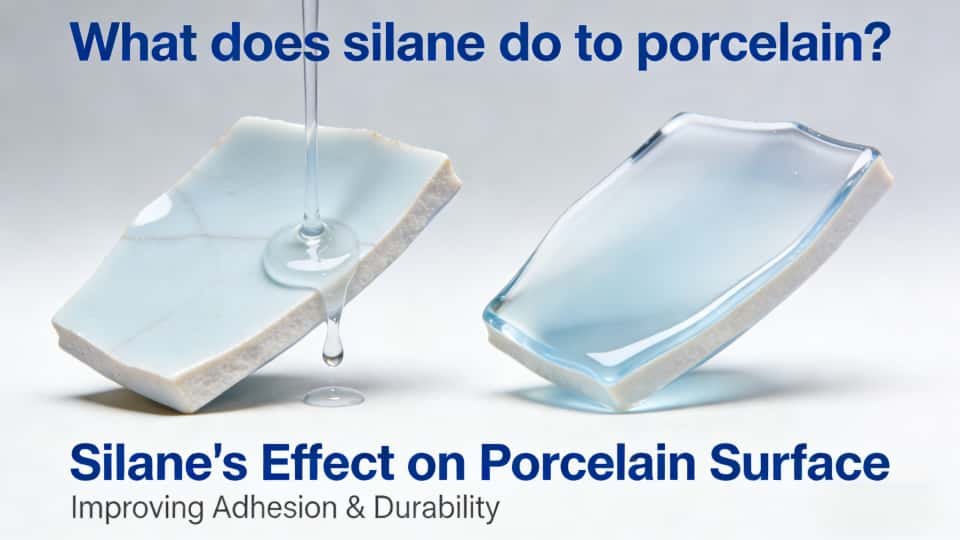
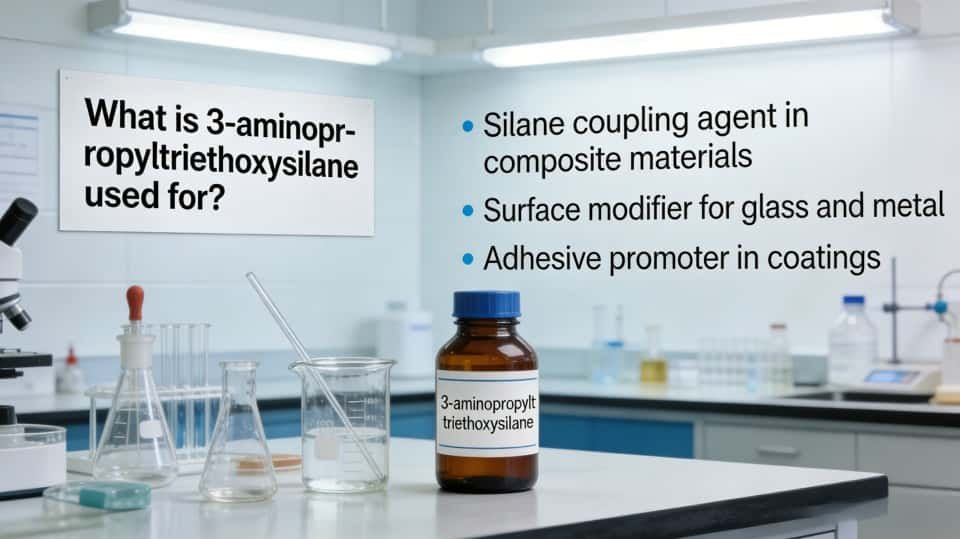
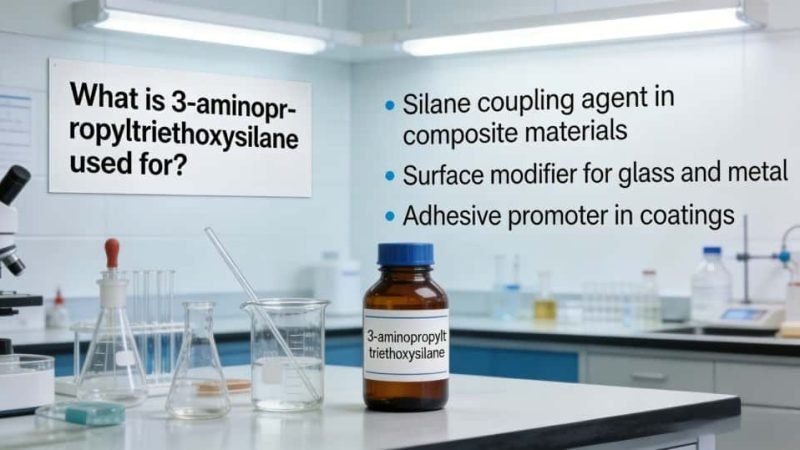
3-aminopropyltriethoxysilane (APTES) is primarily used as a silane coupling agent to improve adhesion between inorganic materials (such as glass, ceramics, metals) and organic polymers by forming durable chemical bonds, while also enhancing surface functionality, corrosion resistance, and compatibility in coatings, composites, adhesives, and advanced materials.
If you are working in coatings, composites, rubber, electronics, or surface modification, understanding how APTES functions—and where it delivers the most value—can significantly improve both product performance and cost efficiency.
3-aminopropyltriethoxysilane can chemically bond both inorganic surfaces and organic polymers.True
APTES contains hydrolyzable ethoxy groups that bond to inorganic substrates and an amino group that reacts with organic polymers, forming a molecular bridge.
Chemical Identity and Functional Structure of APTES
3-aminopropyltriethoxysilane (commonly abbreviated as APTES or KH-550) is one of the most widely used amino-functional silane coupling agents.
Basic Chemical Information
| Property | Value |
|---|---|
| Chemical Name | 3-Aminopropyltriethoxysilane |
| Abbreviation | APTES / KH-550 |
| Molecular Formula | C₉H₂₃NO₃Si |
| Functional Groups | Amino (-NH₂), Ethoxy (-OEt) |
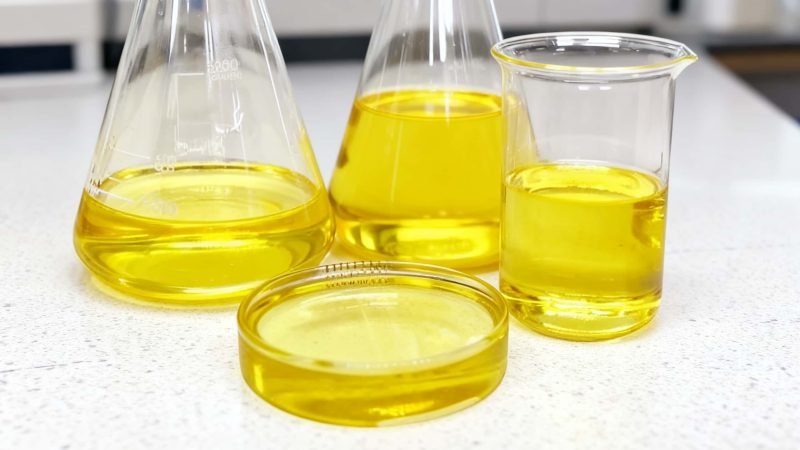
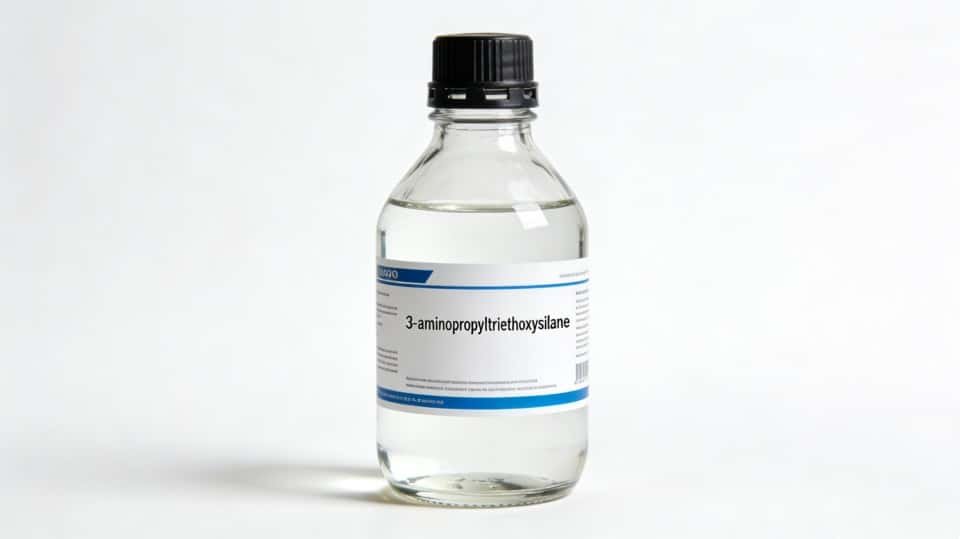
| Appearance | Colorless to light yellow liquid |
Dual Functional Design
- Inorganic-reactive group: Triethoxysilane (hydrolyzes to form silanol)
- Organic-reactive group: Primary amine (-NH₂)
This dual reactivity is the foundation of its widespread industrial utility.
Core Mechanism: How APTES Works
The functionality of APTES lies in its ability to form a chemical bridge between two otherwise incompatible phases.
Reaction Stages
| Stage | Reaction | Function |
|---|---|---|
| Hydrolysis | Si–OEt → Si–OH | Activation |
| Condensation | Si–OH + Surface → Si–O–Surface | Bonding to inorganic substrate |
| Coupling | –NH₂ reacts with polymer | Organic integration |
Interface Formation
| Layer | Role |
|---|---|
| Substrate (glass/metal) | Provides hydroxyl groups |
| Silane layer | Covalent coupling bridge |
| Polymer matrix | Structural integration |
Major Industrial Applications of APTES
APTES is used across multiple industries due to its versatility.
1. Adhesion Promotion in Coatings and Adhesives
- Improves bonding between coatings and substrates
- Enhances durability and resistance
2. Composite Materials (Glass Fiber Reinforced Plastics)
- Strengthens fiber-matrix adhesion
- Improves mechanical properties
3. Surface Modification
- Introduces amino functional groups
- Enables further chemical reactions
4. Sealants and Elastomers
- Improves filler dispersion
- Enhances elasticity and strength
Application Overview Table
| Industry | Function | Benefit |
|---|---|---|
| Coatings | Adhesion promoter | Longer lifespan |
| Composites | Coupling agent | Higher strength |
| Electronics | Surface treatment | Stability |
| Rubber | Filler compatibility | Improved performance |
APTES in Adhesives and Sealants
APTES plays a critical role in adhesive systems.
Key Benefits
- Increased bond strength
- Improved wet adhesion
- Enhanced durability under stress
Performance Comparison
| Property | Without APTES | With APTES |
|---|---|---|
| Adhesion | Weak | Strong |
| Moisture resistance | Low | High |
| Durability | Moderate | High |
APTES in Composite Materials
In fiber-reinforced composites, APTES is essential.
Functions
- Improves fiber wetting
- Enhances load transfer
- Reduces interface failure
Composite Performance
| Parameter | Without APTES | With APTES |
|---|---|---|
| Tensile strength | Lower | Higher |
| Impact resistance | Moderate | Improved |
| Fatigue life | Short | Extended |
APTES in Surface Functionalization
APTES is widely used to functionalize surfaces.
Applications
- Nanoparticle modification
- Biosensors
- Thin film coatings
Functionalization Effects
| Property | Effect |
|---|---|
| Surface energy | Increased |
| Reactivity | Enhanced |
| Compatibility | Improved |
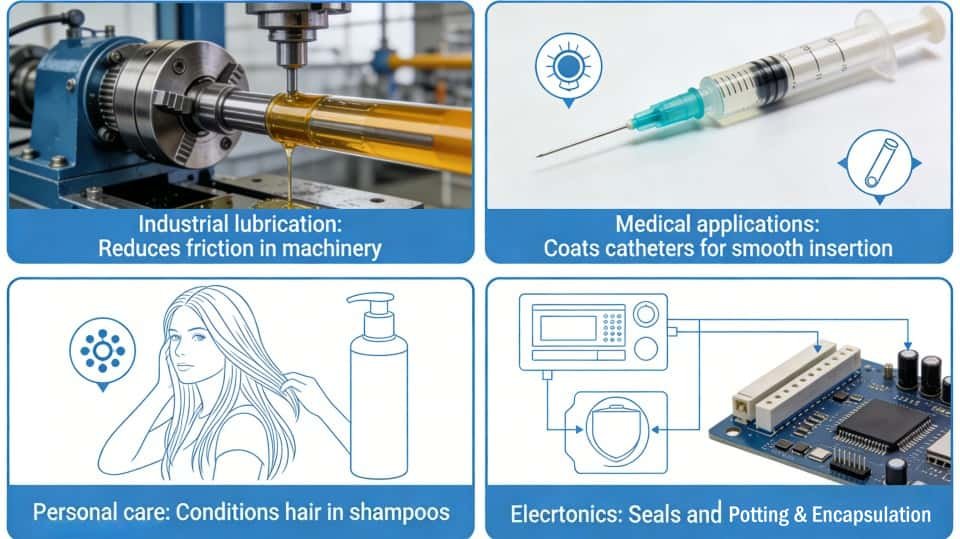
APTES in Electronics and Advanced Materials
APTES is critical in high-tech applications.
Use Cases
- Semiconductor surface treatment
- Encapsulation materials
- Dielectric coatings
Benefits
- Improved insulation
- Reduced moisture ingress
- Enhanced reliability
Factors Affecting APTES Performance
Key Variables
- Surface preparation
- pH conditions
- Concentration
- Application method
Optimization Table
| Factor | Optimal Range |
|---|---|
| pH | 4–5 |
| Concentration | 0.5–2% |
| तापमान | Ambient |
Common Mistakes in Using APTES
- Over-application
- Poor surface cleaning
- Incorrect hydrolysis conditions
Troubleshooting Table
| Problem | Cause | Solution |
|---|---|---|
| Weak bonding | Poor hydrolysis | Adjust pH |
| Uneven coating | Improper mixing | Improve dispersion |
Environmental and Durability Benefits
APTES enhances long-term performance.
Resistance
- Moisture
- Heat
- Chemicals
How to Choose the Right APTES Grade
Selection Criteria
- Application type
- Purity requirement
- Processing conditions
Guide Table
| Requirement | Recommendation |
|---|---|
| General industrial | Standard grade |
| Electronics | High purity |
| Medical | Ultra-pure |
Conclusion
3-aminopropyltriethoxysilane (APTES) is one of the most versatile and essential silane coupling agents in modern materials science. By acting as a molecular bridge between inorganic substrates and organic systems, it dramatically improves adhesion, durability, and overall performance across a wide range of industries—from coatings and composites to electronics and advanced surface engineering. Its dual functionality, ease of use, and cost-effectiveness make it a cornerstone material in both industrial and high-tech applications.
Let’s Optimize Your Application with the Right Silane
At Silicon Chemicals, we supply high-quality APTES and a full range of silane coupling agents tailored to your specific applications. Whether you need reliable bulk supply or technical guidance for advanced materials, our team is ready to support you with consistent quality and expert solutions.
Contact us today to discuss your requirements and get the best silane for your application.
FAQ
Q1: What are the primary industrial uses of 3-aminopropyltriethoxysilane?
A1: 3-Aminopropyltriethoxysilane is commonly used as a silane coupling agent to enhance adhesion between inorganic materials (such as glass, ceramics, and minerals) and organic polymers. It is widely employed in manufacturing fiberglass-reinforced composites, adhesives, sealants, and coatings. By chemically bonding at the interface, it improves the strength, durability, and stability of composite materials and helps prevent delamination or product failure.
Q2: How does 3-aminopropyltriethoxysilane function as an adhesion promoter?
A2: This silane agent contains functional groups (amino and ethoxy) that enable it to bond with both inorganic substrates (like glass or metals) and organic resins (such as epoxy or polyester). When applied as a primer or additive, it forms a molecular bridge that significantly boosts the interfacial bond strength, ensuring cohesive performance in coatings, paints, and adhesive systems across various industries, including electronics and automotive manufacturing.
Q3: Is 3-aminopropyltriethoxysilane used in surface modification?
A3: Yes, 3-aminopropyltriethoxysilane is extensively used for surface modification of materials. It is coated onto surfaces to introduce functional amino groups, which can be further modified for specific reactions or applications. It is essential in biomedical fields for preparing surfaces for biomolecule immobilization, in analytical chemistry for creating active sensor surfaces, and in nanotechnology for functionalizing nanoparticles.
Q4: Can 3-aminopropyltriethoxysilane improve water resistance in composites?
A4: Absolutely. By creating strong covalent bonds at the interface between hydrophilic fillers (like glass or silica) and hydrophobic polymers, 3-aminopropyltriethoxysilane reduces water permeability and improves moisture resistance. This leads to composites with greater dimensional stability, durability, and performance in harsh or wet environments, making them suitable for construction, automotive, and marine applications.
Q5: Are there safety or handling precautions to consider with 3-aminopropyltriethoxysilane?
A5: Yes, 3-aminopropyltriethoxysilane is a reactive chemical and should be handled with care. It can cause irritation to the skin, eyes, and respiratory system. Users should consult the material safety data sheet (MSDS), wear appropriate personal protective equipment (PPE), and ensure proper ventilation when using this silane. Safe storage in tightly sealed containers, away from moisture and incompatible substances, is also crucial to maintain product stability and prevent hazardous reactions.